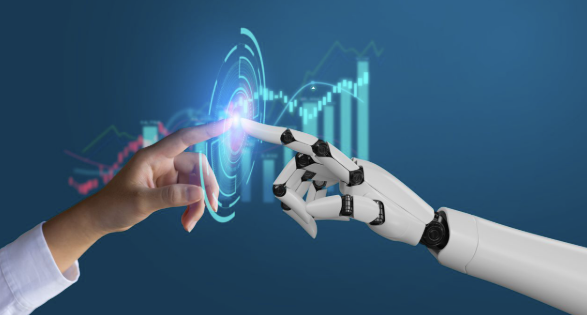
Artificial Intelligence represents a significant advancement in technology, allowing machines to execute tasks that typically require human-like cognitive abilities. Through sophisticated algorithms, AI systems analyze extensive datasets to identify patterns and generate predictions. Central to this process is machine learning, which enables continuous improvement based on data interactions. As AI’s capabilities expand, its implications for various sectors become increasingly profound. Understanding the mechanics of AI will shed light on its transformative potential.
Understanding the Basics of Artificial Intelligence
Artificial intelligence (AI) represents a transformative paradigm in computing, characterized by its capacity to perform tasks typically requiring human intelligence.
AI definitions vary, encompassing machine perception, reasoning, and decision-making. Its historical development spans decades, evolving from rudimentary algorithms to complex systems.
As AI continues to advance, it offers unprecedented opportunities for autonomy, challenging traditional boundaries and empowering individuals in their pursuits of freedom and innovation.
Key Technologies Behind AI: Machine Learning and Beyond
At the heart of contemporary artificial intelligence lies a suite of key technologies, with machine learning (ML) serving as a foundational pillar.
Neural networks underpin ML, enabling the analysis of complex data patterns. Deep learning, a subset of ML, further enhances AI capabilities by mimicking human cognitive processes.
Together, these technologies empower systems to process information, adapt, and make autonomous decisions, fostering innovation and autonomy.
How Does AI Learn and Adapt?
Many AI systems learn and adapt through a process known as training, which involves processing vast amounts of data to identify patterns and make predictions.
This training can occur through supervised learning, where labeled data guides the model, or unsupervised learning, where the system autonomously finds structure within unlabeled data.
Both methods empower AI to evolve and enhance its decision-making capabilities over time.
See also:What Is 5G Technology
Real-World Applications of AI in Everyday Life
AI technologies have seamlessly integrated into various aspects of daily life, transforming how individuals interact with the world.
Smart assistants streamline tasks, enhancing productivity and accessibility. Meanwhile, personalized recommendations reshape consumer experiences, tailoring choices to individual preferences.
This convergence of technology not only optimizes daily routines but also empowers users to navigate their environments with unprecedented autonomy and efficiency.
Conclusion
In conclusion, artificial intelligence represents a pivotal advancement in technology, with its capabilities continuously evolving. Notably, a recent study highlighted that AI-driven automation could potentially enhance global productivity by up to 40% by 2035. This statistic underscores the profound impact AI may have across sectors, driving efficiency and innovation. As AI systems become increasingly integrated into daily life, their ability to learn and adapt will reshape industries, prompting a reevaluation of human roles in the workforce.